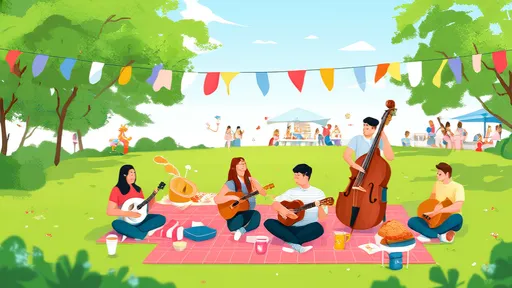
As the golden hour casts long shadows across the city's green spaces, a new kind of social symphony is tuning up in parks from coast to coast. The Park Music Social, an innovative fusion of open-air concerts and community connection, is redefining how urban dwellers mingle through the universal language of music. These gatherings transform ordinary weekends into vibrant tapestries of shared melodies and newfound friendships, creating organic intersections between artistic expression and human connection beneath the canopy of trees.
The concept emerged organically from the post-pandemic yearning for authentic interaction combined with the timeless appeal of live music. What began as scattered gatherings of musicians in local parks has evolved into a structured yet spontaneous movement where strangers become friends through chord progressions and chorus lines. The beauty of these events lies in their duality – they function as both concert venues and social laboratories where inhibitions melt away with the first notes of a familiar song.
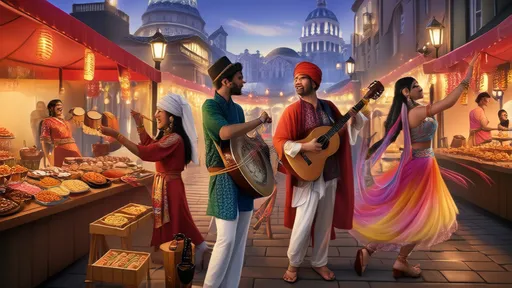
Picture this: a grassy amphitheater slowly filling with people carrying picnic blankets and instrument cases. The air hums with anticipation as guitar cases snap open and microphone stands find their footing on the uneven ground. There's no backstage, no velvet ropes – just a circular arrangement of musicians and listeners blurring the lines between performers and audience. A jazz guitarist might be tuning up next to a folk singer-songwriter, while a classical violinist shares sheet music with a hip-hop beatboxer. This musical democracy creates a unique environment where genres collide and collaborate in real time.
The social dynamics unfold like a well-composed piece of music. Initially, participants tend to cluster in genre-based groups – the acoustic guitar circle here, the electronic music enthusiasts there. But as the music begins to weave through the gathering, these boundaries dissolve. Someone starts a rhythm, another adds a melody, and suddenly a dozen strangers are creating something beautiful together. The music becomes the conversation starter that needs no words, the common ground that makes introductions unnecessary yet inevitable.
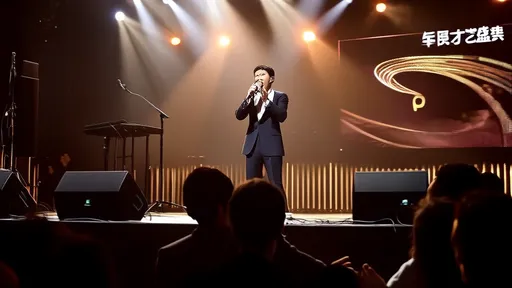
These events typically follow a loose structure that encourages participation while maintaining musical coherence. The first hour often features scheduled performances from local artists who serve as musical icebreakers. As the sun begins to set, the format shifts to open jam sessions where anyone can join the musical conversation. This transition from performance to participation is where the magic truly happens – when accountants become percussionists and teachers reveal their secret talent for soulful harmonies.
The psychological impact of making music together cannot be overstated. Scientific studies have shown that synchronized musical activity releases oxytocin and dopamine, creating feelings of trust and pleasure among participants. This neurochemical cocktail transforms polite strangers into musical comrades within minutes. The shared focus on creating harmony literally creates interpersonal harmony, breaking down social barriers that might take weeks to overcome in conventional settings.
Organizers have discovered that the most successful events balance structure with spontaneity. While there's always a loose schedule and basic equipment provided, the real magic emerges from the unexpected collaborations. A songwriting circle might form spontaneously near the oak trees, while a percussion ensemble materializes using found objects from the park. This organic development gives each gathering its unique character and ensures that no two Music Socials are ever alike.
The demographic diversity at these events often surprises first-time attendees. The music creates a rare social equalizer where age, profession, and background become irrelevant. Retired doctors jam with college students, software engineers harmonize with kindergarten teachers, and all find common ground through rhythm and melody. This cross-generational, cross-cultural mixing represents one of the most valuable aspects of the movement, creating social bridges that rarely form in our increasingly segmented society.
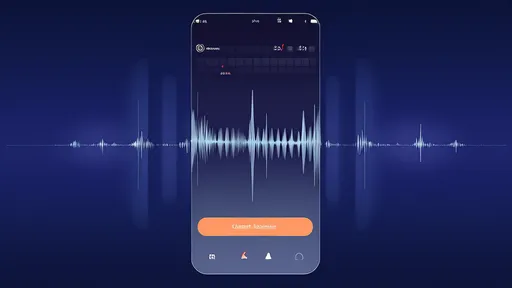
Technology plays an interesting role in these seemingly analog gatherings. While the events themselves are resolutely low-tech (no amplification beyond small battery-powered speakers), social media and messaging apps have become crucial for organizing and spreading the word. WhatsApp groups form around specific instruments or genres, Instagram stories document particularly magical moments, and dedicated apps help musicians find each other before and after events. This digital scaffolding supports the analog experience without overwhelming it.
The movement has developed its own etiquette and culture through practice. There's an unspoken rule about supporting rather than criticizing, about listening as much as playing, about making space for quieter voices. Musicians learn to read visual cues and adjust their volume accordingly, while non-musicians discover that clapping rhythms or simply attentive listening constitutes valuable participation. This developing culture of musical empathy may represent the movement's most significant social contribution.
As the season progresses, regular attendees often form deeper connections that extend beyond the park gatherings. Musical collaborations evolve into recording projects, music lessons, and even bands. But perhaps more importantly, the friendships forged over shared melodies lead to dinner parties, hiking groups, and support networks. The music provides the initial connection, but the relationships take on lives of their own, enriching participants' social worlds in numerous ways.
Urban planners and community organizers have taken note of the phenomenon's benefits. Cities that have embraced and supported these gatherings notice increased park utilization, improved community relations, and even reductions in local crime rates. The simple act of making music together appears to strengthen community bonds in measurable ways, providing a compelling argument for municipal support of such organic social initiatives.
The future of Park Music Socials looks bright as the concept continues to evolve. Some organizers are experimenting with theme nights focusing on specific genres or historical periods. Others are incorporating music workshops before the social hours, helping beginners gain confidence before joining the musical conversation. The core principle remains unchanged: creating spaces where music facilitates human connection in its most authentic form.
As night falls and the final notes fade into the twilight, participants pack up their instruments and new phone contacts. There's a palpable sense of having shared something meaningful – not just music, but moments of vulnerability and creativity with former strangers. The park empties, but the connections resonate long after the last chord has faded, proof that sometimes the oldest human traditions – making music together under the open sky – remain our most powerful social technology.
By /Aug 22, 2025
By /Aug 22, 2025
By /Aug 22, 2025
By /Aug 22, 2025
By /Aug 22, 2025
By /Aug 22, 2025
By /Aug 22, 2025
By /Aug 22, 2025
By /Aug 22, 2025
By /Aug 22, 2025

By /Aug 22, 2025
By /Aug 22, 2025
By /Aug 22, 2025
By /Aug 22, 2025
By /Aug 22, 2025
By /Aug 22, 2025
By /Aug 22, 2025
By /Aug 22, 2025
By /Aug 22, 2025
By /Aug 22, 2025