Double Mirror Reflection: Eternity in Infinite Mirrors

Aug 27, 2025 By

In the hushed galleries of the Metropolitan Museum, a new installation quietly dismantles our perception of reality. Double Reflection: The Eternal in Infinite Mirrors is not merely an exhibition; it is a philosophical inquiry rendered in glass and light, a silent conversation between the viewer and the void. Curated by the visionary Elara Vance, this collection of works from a dozen international artists explores the profound, often unsettling, dialogue between the self and its countless replicas in the mirrored abyss.

The central piece, from which the exhibition draws its name, is a creation by the reclusive Japanese artist Kenji Sato. Upon entering a seemingly plain, dark room, the visitor is met with two flawless, opposing mirrors. A single, suspended light bulb hangs between them, its light both the subject and the object of the infinite regression it creates. The effect is instantaneous and breathtaking. One does not simply see a long tunnel of lights; one is physically inserted into a cosmos of recursive self, stretching into a theoretical eternity. The ‘you’ in the immediate foreground is solid, familiar. But the ‘you’ ten reflections deep is a stranger, a pixelated ghost distorted by the imperceptible flaws in the glass and the cumulative journey of light. It is a powerful metaphor for the modern self, endlessly curated and reflected back at us through digital avatars and social media feeds, each iteration further removed from the original source.

This theme of fractured identity is echoed, quite literally, in the work of Spanish sculptor Mateo Cruz. His “Fractured Echoes” employs broken, warped, and pieced-together mirrors arranged in a sprawling, maze-like structure on the floor. There is no single, unified reflection to be found. Instead, the viewer’s image is shattered, captured in a hundred different fragments, each showing a sliver of a whole that can no longer be perceived directly. One fragment captures a worried eye, another the tense line of a shoulder, a third the hesitant gesture of a hand. Cruz forces us to confront the uncomfortable truth that our identity is not a monolithic whole but a collage of these disparate, often contradictory, parts. We are not one self but many, and the quest for a singular, authentic identity may be the greatest illusion of all.

Beyond the psychological, the exhibition delves into the metaphysical. Iranian-American artist Layla Parviz’s “The Observer Effect” is a minimalist’s dream and a physicist’s playground. A single, high-precision mirror is placed at the end of a long, dark corridor. As the viewer approaches, their reflection sharpens into focus. However, integrated into the frame are delicate sensors that detect proximity. The closer one gets to truly see oneself, the more the mirror’s surface subtly fogs over, obscuring the details. It is a brilliant, interactive manifestation of the quantum principle that the act of observation alters the state of the observed. Parviz suggests that the same is true of self-examination; the harder we look inward in search of a definitive truth, the more we potentially change or obscure the very thing we are trying to see. The self is not a static portrait to be analyzed but a dynamic process, forever altered by the gaze upon it.

The most hauntingly beautiful piece may be Chilean artist Rafael Torres’s “Chronos Untangled.” Using a complex arrangement of semi-transparent mirrors and timed, fading LEDs, Torres creates the illusion of time-lapse within a single static view. Stand before it, and you see not only your current self but faint, ghostly after-images of where you were just seconds before, and even fainter pre-images of where you might move next. It creates a palpable sense of time as a fluid, simultaneous medium rather than a linear progression. Your past, present, and potential future selves coexist in the same space, a silent council of who you were, are, and could be. It evokes a deep, almost melancholic nostalgia for moments that are both immediately past and yet to come, highlighting the eternal present tense of consciousness trapped within the flow of time.

Elara Vance’s curatorial genius lies in her sequencing. The journey is deliberate. It begins with the awe of infinite possibility in Sato’s work, moves through the fragmentation of Cruz, confronts the existential dilemma in Parviz’s piece, and finally arrives at the temporal dissolution of Torres’s installation. The visitor is led on a path from external perception to internal deconstruction. “Double Reflection” argues that the infinity we see in the mirror is not just an optical trick; it is a parallel to the infinite complexity within the human psyche. The mirrors do not create something new; they reveal the boundless, often chaotic, reality that already exists.

The exhibition has unsurprisingly ignited fervent discussion among critics and philosophers alike. Dr. Alistair Finch, a cognitive philosopher from Cambridge, remarked, “This is not art about seeing. This is art about ‘seeing that you are seeing.’ It meta-cognizes the very process of perception and self-awareness. The mirror, the oldest and simplest tool for self-recognition, is finally being used to show us its own inherent deception.” The show challenges the very foundation of how we construct reality and identity in an age of superficial reflection. It asks if the true eternal is not found in some distant heaven, but in the endless, recursive loop of self-perception that defines our every waking moment.

In a world saturated with images and obsessed with self-presentation, Double Reflection: The Eternal in Infinite Mirrors serves as a necessary, sobering pilgrimage. It strips away the vanity and the vanity’s medium, leaving the viewer alone in a quiet room with an infinite number of themselves. The final reflection, the one that stays with you long after you’ve left the museum, is not in glass, but in mind. It is the uncanny and eternal echo of a self forever multiplied, forever sought, and never completely grasped.
Recommend Posts
Romance

Optical Correction of Presbyopia: Age Function of Lens Diopters

By /Aug 27, 2025

As we journey through life, our eyes undergo a natural and inevitable transformation that begins subtly in our early forties. This biological process, known as presbyopia, gradually diminishes our ability to focus on nearby objects, making tasks like reading a restaurant menu or threading a needle increasingly challenging. The primary optical tool for managing this condition is the humble yet scientifically sophisticated reading glass, whose lens power is not a one-size-fits-all solution but a carefully calculated function of age.
Romance

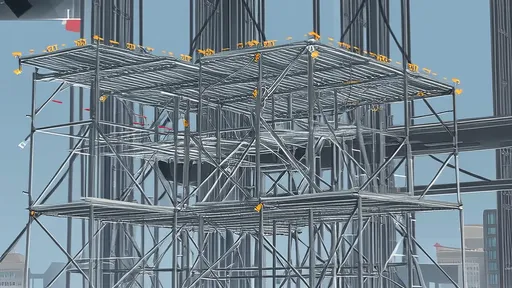
Scaffolding Structures: Stability Calculation of Temporary Support Systems

By /Aug 27, 2025

In the realm of construction engineering, the stability of temporary support systems remains a critical yet often underestimated aspect of project safety and efficiency. Scaffolding structures, which provide essential access and support during building, renovation, and maintenance work, demand rigorous attention to design, calculation, and implementation. The consequences of oversight can be catastrophic, leading to structural failures, injuries, and significant financial losses. As such, a deep understanding of the principles governing scaffold stability is not just a regulatory requirement but a moral imperative for engineers and site managers alike.
Romance

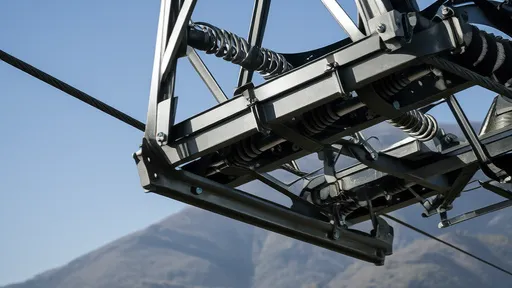
Cable Car Suspension System: Damping Control of Cable Vibration"

By /Aug 27, 2025

Cable car systems represent one of the most fascinating feats of modern engineering, combining elegance with brute mechanical force to transport passengers across challenging terrains. At the heart of these systems lies the suspension mechanism, a complex network of steel cables, towers, and cabins that must perform flawlessly under varying environmental and operational conditions. Among the myriad challenges faced by engineers, the control of cable vibrations stands out as a particularly critical area of focus. Unchecked oscillations can lead to accelerated wear, passenger discomfort, and in extreme cases, catastrophic failure. Thus, the development and implementation of effective damping control strategies for steel cable vibrations is not merely an academic exercise—it is an essential practice for ensuring the safety, longevity, and reliability of cable transportation networks worldwide.
Romance

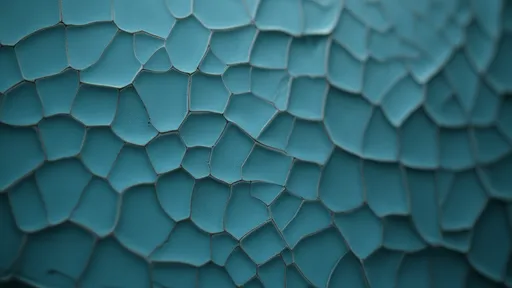
Ceramic Glaze Cracking: Artistic Expression of Thermal Expansion Coefficient Differences

By /Aug 27, 2025

Crazing in ceramic glazes, often perceived as a flaw in industrial production, represents one of the most poetic and deliberate artistic expressions in the world of studio ceramics. This intricate network of fine lines, known as crackle or crackling, emerges from the calculated interplay between the clay body and the glaze—a dance of tension and release governed by the critical principle of thermal expansion. The art lies not in preventing this phenomenon, but in mastering it, transforming a potential weakness into a celebrated feature of depth and history.
Romance

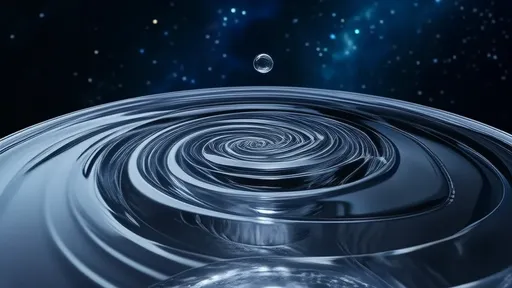
Ripple Patterns: The Heartbeat Diffusion of Fluid Dynamics"

By /Aug 27, 2025

In the quiet corners of scientific inquiry, where observation meets wonder, the study of fluid dynamics has long captivated those who seek to understand the hidden choreography of nature. Among its most poetic expressions is the humble water ripple—a phenomenon so commonplace that its profundity is often overlooked. Yet, beneath its serene surface lies a narrative of energy, motion, and interconnectedness that resonates far beyond the boundaries of a pond or a laboratory.
Romance

Password Lock: Exclusive Memories of Digital Combinations"

By /Aug 27, 2025

In the quiet hum of modern security, the combination lock stands as a testament to a timeless dance between memory and mechanics. These unassuming devices, often tucked away on briefcases, lockers, and diaries, guard our secrets not with keys, but with sequences—a numerical poetry known only to their keepers. The Password Lock: Exclusive Memory of Digital Combinations isn't just a theme; it's an exploration of how these simple strings of digits become intimate extensions of our minds, weaving personal narratives into the very fabric of security.
Romance

Magnifying Glass Focus: Love Ignited by Sunlight and Heat

By /Aug 27, 2025

In the quiet corners of scientific inquiry and human compassion, an extraordinary phenomenon is unfolding—one where the concentrated power of sunlight is being harnessed not just for energy, but as a beacon of hope and warmth for communities in need. This initiative, aptly metaphorized as focusing a magnifying glass to ignite the heart of sunlight’s heat, represents a convergence of innovation, sustainability, and empathy. It is a story of how simple principles of physics are being transformed into life-changing applications, illuminating paths toward a brighter, more equitable future.
Romance

Fridge Magnets: Magnetic Memory Markers

By /Aug 27, 2025

In kitchens and home spaces across the globe, a quiet yet persistent form of storytelling unfolds daily. It is not told through books or screens, but through small, often whimsical, magnetic objects clinging to the surfaces of refrigerators. These humble items, known simply as fridge magnets, serve as far more than decorative trinkets; they are miniature chronicles of personal journeys, markers of memory, and silent witnesses to the lives unfolding around them.
Romance

Puzzle Game: The Perfect Fit of Fragment Matching"

By /Aug 27, 2025

In the quiet corners of coffee shops and the focused silence of late-night living rooms, a timeless ritual unfolds. Fingers sift through scattered pieces, eyes scan for telltale patterns, and the satisfying click of interlocking cardboard signals small victories. This is the world of jigsaw puzzles, a seemingly simple pastime that has captivated minds for centuries, weaving together art, mathematics, psychology, and a profound human desire to create order from chaos.
Romance

Lottery Machine: A Lucky Encounter in the World of Probability"

By /Aug 27, 2025

In the hushed auditorium of a televised lottery drawing, the mechanical whir of numbered balls tumbling against each other creates a peculiar symphony of chance. To the average viewer, it is a spectacle of randomness, a moment where fortune seems to descend from the heavens to select a handful of winners. Yet, beneath the polished surface of this modern ritual lies a profound and often misunderstood dialogue between pure mathematics and the human desire for a life-altering break. The lottery machine is not merely a box of fate; it is a meticulously engineered device operating under the immutable laws of probability, a stage where the cold, precise logic of combinatorics performs a tantalizing dance with our warm, hopeful perception of luck.
Romance

Map Cartography: Paths of Intersection in Contour Lines

By /Aug 27, 2025

In the evolving world of cartography, the art and science of map-making continue to reveal new dimensions of how we perceive and navigate our surroundings. Among the myriad techniques employed, the interpretation of contour lines stands as a fundamental yet profoundly intricate aspect. These lines, which trace points of equal elevation across a landscape, form the backbone of topographic maps, offering a two-dimensional representation of three-dimensional terrain. However, beyond their basic utility, contour lines harbor deeper insights—particularly when it comes to understanding and predicting paths of intersection, or what we might call encounter paths in geographic analysis.
Romance

Snowman Sculpting: Ephemeral Art of Crystal Structures

By /Aug 27, 2025

As winter's chill settles across northern latitudes, an ephemeral art form emerges from the interplay of human creativity and meteorological coincidence. The construction of snowmen, that most whimsical of cold-weather traditions, has evolved beyond carrot-nosed caricatures into sophisticated temporary sculptures exploring crystalline architecture. What begins as childhood play reveals profound connections to material science, structural engineering, and the very nature of water's solid state.
Romance

Plant Watering: Capillary Action and the Nourishment of Life"

By /Aug 27, 2025

In the quiet corners of our homes and the sprawling expanses of nature, a silent, hydraulic ballet unfolds daily—the journey of water from soil to stem, from root to leaf. This process, capillary action, is one of nature’s most elegant mechanisms, a physical phenomenon that breathes life into the plant kingdom. While the act of watering plants may seem mundane to the casual observer, it is, in fact, a sophisticated interplay of physics, biology, and chemistry—a story of how life sustains itself against the pull of gravity.
Romance

Keyboard Rhythm: The Harmonious Duet of Typing Frequencies"

By /Aug 27, 2025

In the quiet hum of modern workspaces, a new form of unspoken collaboration has emerged—one that exists not through spoken words, but through the rhythmic cadence of keystrokes. This phenomenon, which we might call Keyboard Rhythm: The Unspoken Symphony of Typing Frequency, reveals how individuals in shared environments synchronize their typing patterns, creating an invisible yet palpable harmony. It is a dance of fingers on keys, a collective pulse that transcends individual tasks, binding people in a shared auditory experience.
Romance

Double Mirror Reflection: Eternity in Infinite Mirrors

By /Aug 27, 2025

In the hushed galleries of the Metropolitan Museum, a new installation quietly dismantles our perception of reality. Double Reflection: The Eternal in Infinite Mirrors is not merely an exhibition; it is a philosophical inquiry rendered in glass and light, a silent conversation between the viewer and the void. Curated by the visionary Elara Vance, this collection of works from a dozen international artists explores the profound, often unsettling, dialogue between the self and its countless replicas in the mirrored abyss.
Romance

Sealed with Wax: The Eternal Moment of Cooling and Solidification

By /Aug 27, 2025

In an age of digital immediacy and ephemeral communication, the ancient art of wax sealing endures as a poignant testament to permanence and personal touch. The phrase "Wax Seal: The Eternal Moment of Cooling and Solidification" evokes not merely a craft, but a profound narrative of transformation—where molten potential meets its final, immutable form. It is a dance of heat and coolness, fluidity and fixity, capturing a moment of intention forever in a disk of colored wax.
Romance

Cassette Flip: The Double Narrative of Magnetic Storage

By /Aug 27, 2025

In an age where streaming services and cloud storage dominate our digital lives, it’s easy to forget the tactile, almost ritualistic experience of handling physical media. Among the most evocative relics of this bygone era is the cassette tape—a humble yet revolutionary format that transformed how we consumed music, stories, and data. At the heart of its design lay a simple but ingenious feature: the ability to flip the tape. This act of turning the cassette over wasn’t just a mechanical necessity; it became a cultural touchstone, a narrative device, and a symbol of duality that resonated deeply with users worldwide.
Romance

Elevator Music: Atmosphere Regulation in Enclosed Spaces"

By /Aug 27, 2025

Elevator music, that often overlooked yet ever-present sonic backdrop, has long been the subject of both fascination and derision. Known in more formal circles as Muzak—though that term specifically refers to one company’s product—this genre of intentionally unobtrusive sound serves a far more complex purpose than simply filling an awkward silence. Its primary function is the subtle yet powerful regulation of atmosphere within enclosed, often high-stress environments. From the hushed cabins of elevators to the sprawling concourses of airports, this carefully engineered audio serves as an acoustic tool for mood alteration, behavioral influence, and environmental control.
Romance

Cloud Identification: Shape Association in Meteorology

By /Aug 27, 2025

In the vast expanse of the sky, clouds drift as transient sculptures, each formation a fleeting masterpiece of nature's artistry. For centuries, humans have gazed upward, finding shapes in the cumulus and cirrus—a dragon here, a ship there—transforming meteorology into a canvas for the imagination. This practice, known as cloud shape association, bridges the gap between scientific observation and creative interpretation, offering a unique lens through which to understand both the atmosphere and the human mind.
Romance

Echolocation: Calculation of Sound Wave Reflection Encounter

By /Aug 27, 2025

In the quiet depths of ocean trenches and the vast expanse of darkened caves, nature has engineered one of its most sophisticated sensory adaptations: echolocation. This biological sonar system, employed by creatures ranging from bats to dolphins, represents a remarkable convergence of physics, biology, and environmental adaptation. The underlying principle—using sound waves and their returning echoes to construct a detailed mental map of the surroundings—is a testament to evolutionary ingenuity. For decades, scientists have been captivated by this phenomenon, not merely as a biological curiosity but as a complex natural algorithm for spatial reasoning and object detection. The study of these acoustic encounters, specifically the calculation and interpretation of reflected sound waves, opens a window into both the natural world and potential technological applications.