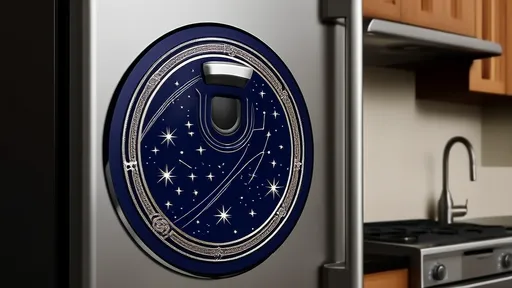
In kitchens and home spaces across the globe, a quiet yet persistent form of storytelling unfolds daily. It is not told through books or screens, but through small, often whimsical, magnetic objects clinging to the surfaces of refrigerators. These humble items, known simply as fridge magnets, serve as far more than decorative trinkets; they are miniature chronicles of personal journeys, markers of memory, and silent witnesses to the lives unfolding around them.
The origin of the refrigerator magnet is intrinsically tied to the invention of the domestic refrigerator itself. As these appliances became commonplace in mid-20th-century households, their smooth, metallic doors presented a vast, blank canvas. Initially, magnets were purely functional—simple, utilitarian objects designed to hold notes, shopping lists, or important reminders in a highly visible location. They were tools for organization, a way to combat the chaos of domestic life. Yet, it did not take long for their potential to be realized. The flat, magnetic backing was a perfect foundation for something more.
The transition from tool to totem began with tourism. Resorts, scenic landmarks, and eventually entire cities saw an opportunity. A small, lightweight, and inexpensive magnet emblazoned with a location’s name or image became the perfect souvenir. It was a tangible piece of a place, a proof of visit that could be easily transported and displayed. This practice transformed the refrigerator door into a cartographic display of a family’s or individual’s travels. Each magnet became a pinned point on a personal map, a trigger for a story. "That one is from the Grand Canyon, we hiked down at sunrise," or "This seashell is from our first trip to the coast as a couple." The door evolved into a curated gallery of experience.
Beyond geography, these magnetic markers serve a deeper psychological purpose. They are a form of externalized memory. In the hustle of daily life, it is easy for moments to blur and fade. A magnet, however, acts as a physical anchor for a specific feeling, a person, or a period in time. A funny cartoon character magnet from a childhood birthday party, a elegant ceramic piece from a anniversary dinner, a handmade clay creation from a young child—each is a bulwark against forgetting. The refrigerator door becomes a subconscious landscape of the self, a collage of what and who we hold dear. We glance at it countless times a day, each look a subtle reinforcement of identity and belonging.
The aesthetic of the fridge magnet is a genre of folk art all its own. There is a stunning diversity in their design, reflecting shifts in technology, culture, and taste. Early magnets were often simple printed paper under a plastic dome. Then came molded plastic, rubber, polished stone, and intricate laser-cut wood. Today, they can be custom-made from photographs, turning a favorite snapshot into a daily fixture. The style of magnets collected often says much about the collector. One door might be a minimalist arrangement of sleek, modern geometric shapes, while another is a joyous, chaotic mosaic of color, texture, and memory, every available inch covered. This collection is never static; it is a living exhibit, constantly edited and added to, reflecting the ongoing narrative of a life.
There is also a uniquely social dimension to this phenomenon. Magnets are frequently given as gifts, making them physical embodiments of relationships. To give someone a magnet is to give them a small piece of a shared experience or an inside joke, destined to occupy a space in their home. Furthermore, the refrigerator display is often a first thing shown to guests, a non-verbal primer on the inhabitants’ lives. It is a conversation starter, a way to connect. We tell our stories through these objects, offering visitors a glimpse into our adventures, our family, and our sense of humor.
In our increasingly digital age, where photographs live in the cloud and communication is ephemeral, the persistence of the analog fridge magnet is noteworthy. It represents a desire for tangible connection in a virtual world. A magnet has weight, texture, and a physical presence. It can fall off with a slam of the door and be picked up and reaffixed. This tangibility is powerful. It grounds our memories in the real world, making them more immediate and real than a folder of images on a hard drive ever could. The act of curating the door is a slow, thoughtful process, standing in stark contrast to the rapid-fire curation of a digital social media feed.
Ultimately, the collection on a refrigerator is more than a random assortment of magnets. It is a deeply personal archive. It is a narrative without words, written in the language of objects. It charts personal history, signifies cherished relationships, and showcases individual aesthetic. These magnetic adsorbed memory markers are silent but powerful. They remind us of where we have been, who we love, and what we find beautiful or funny. They are the small, magnetic poetry of everyday life, holding fast not just to a metal door, but to us.

By /Aug 27, 2025

By /Aug 27, 2025

By /Aug 27, 2025
By /Aug 27, 2025
By /Aug 27, 2025

By /Aug 27, 2025

By /Aug 27, 2025
By /Aug 27, 2025
By /Aug 27, 2025

By /Aug 27, 2025

By /Aug 27, 2025

By /Aug 27, 2025

By /Aug 27, 2025

By /Aug 27, 2025

By /Aug 27, 2025

By /Aug 27, 2025
By /Aug 27, 2025
By /Aug 27, 2025

By /Aug 27, 2025
By /Aug 27, 2025
