In the quiet corners of scientific inquiry, where observation meets wonder, the study of fluid dynamics has long captivated those who seek to understand the hidden choreography of nature. Among its most poetic expressions is the humble water ripple—a phenomenon so commonplace that its profundity is often overlooked. Yet, beneath its serene surface lies a narrative of energy, motion, and interconnectedness that resonates far beyond the boundaries of a pond or a laboratory.
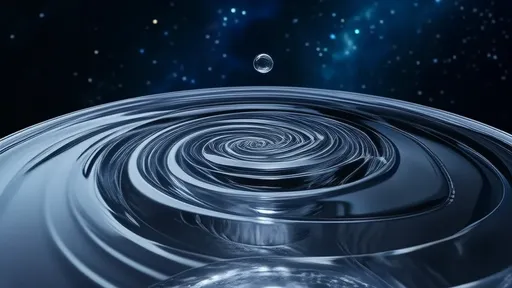
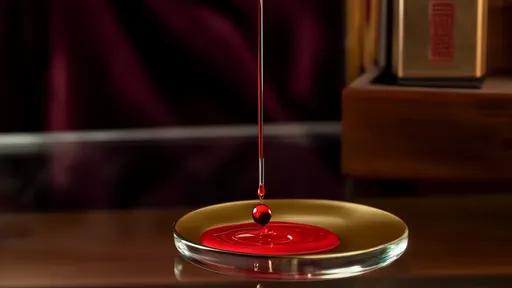
The genesis of a ripple is deceptively simple: a disturbance, whether a dropped pebble or a gentle breeze, imparts energy to the water's surface. This energy propagates outward in concentric circles, each wave a messenger of the initial event. What appears as a mere pattern is, in fact, a complex dance of molecular interactions governed by the principles of fluid mechanics. The water molecules, coerced from their equilibrium, transfer energy to their neighbors in a chain reaction that embodies both efficiency and elegance.
At the heart of this motion lies the interplay of forces—surface tension, gravity, and inertia—each vying for dominance yet collaborating to sustain the ripple's journey. Surface tension, that delicate skin at the water's interface, dictates the behavior of smaller waves, lending them a crisp, defined form. Gravity, the ever-present anchor, influences larger waves, pulling them back toward stillness even as they advance. In this push and pull, the ripple becomes a transient sculpture, etching its story upon the water before surrendering to calm.
But the ripple is more than a physical event; it is a metaphor for diffusion, for the way influence spreads through systems both natural and human. Just as the ripple disperses energy across the water, so too do ideas, emotions, and innovations propagate through societies. The initial impulse—a discovery, a word, an act of kindness—radiates outward, touching lives in expanding circles. This heartbeat of diffusion mirrors the fluid dynamics that scientists so meticulously chart, reminding us that the laws of physics often echo the rhythms of existence.
Researchers have long sought to decode the mathematics of ripples, employing equations that describe their speed, wavelength, and decay. The classical models, rooted in the work of pioneers like Laplace and Navier-Stokes, provide a framework for prediction, yet the full tapestry of ripple behavior continues to reveal new threads. Turbulence, interference, and environmental factors introduce variables that challenge even the most sophisticated simulations, underscoring the dynamic and often unpredictable nature of fluid systems.
In recent years, advancements in computational fluid dynamics have allowed scientists to visualize ripples with unprecedented clarity. High-speed cameras capture the split-second formation of waves, while algorithms model their evolution across virtual domains. These tools not only enhance our understanding of water's behavior but also inform applications ranging from coastal engineering to medical technologies, where the principles of wave propagation prove unexpectedly relevant.
Yet, for all the precision of modern science, the water ripple retains an air of mystery—a reminder that some phenomena resist full quantification. There is an artistry to its spread, a spontaneity that defies pure reductionism. Perhaps this is why poets and philosophers have so often drawn upon the image of the ripple: it embodies the beautiful tension between order and chaos, between the knowable and the sublime.
As we peer into the future, the study of fluid dynamics promises to unravel even deeper layers of this mystery. Researchers are exploring how micro-scale ripples influence climate patterns, how nano-fluidics might revolutionize energy storage, and how biological systems—from the flow of blood to the movement of cells—harness these same principles. The ripple, once a simple curiosity, now stands as a gateway to understanding complex systems across disciplines.
In the end, the water ripple is both a lesson and a legend. It teaches us about the diffusion of energy and the interconnectedness of all things. It tells a story of motion that begins with a single act and ripples outward, touching the world in ways seen and unseen. And in that story, we find a reflection of our own capacity to create waves—to set in motion changes that spread far beyond our immediate reach, echoing across time and space.
So the next time you witness a ripple upon the water, pause and consider the hidden forces at play. In its gentle spread, you are witnessing not just physics in action, but a universal language of influence—a heartbeat that pulses through the very fabric of reality.

By /Aug 27, 2025
By /Aug 27, 2025
By /Aug 27, 2025
By /Aug 27, 2025
By /Aug 27, 2025

By /Aug 27, 2025

By /Aug 27, 2025

By /Aug 27, 2025

By /Aug 27, 2025

By /Aug 27, 2025

By /Aug 27, 2025
By /Aug 27, 2025

By /Aug 27, 2025

By /Aug 27, 2025

By /Aug 27, 2025
By /Aug 27, 2025

By /Aug 27, 2025

By /Aug 27, 2025

By /Aug 27, 2025

By /Aug 27, 2025